Loading...
Serving Santa Monica, CA and surrounding areas. (424) 322-4740
Every structure you build rests on what is underground. Get concrete footings in Santa Monica that are reinforced for earthquake country, permitted by the city, and poured on properly assessed soil.
Concrete footings in Santa Monica involve excavating to stable soil, placing and tying steel reinforcement, passing a city inspection before any pour, and curing the footing properly before framing begins - most standard residential footing projects take one to three days of active work, with permit review adding one to three weeks to the timeline beforehand.
Most homeowners contact us when they are planning an addition, a new deck, an ADU, or when a home inspection flagged concerns about existing footings. Concrete footings in Santa Monica involve more engineering review than comparable work in lower-seismic states because local building codes require reinforcement designed to handle lateral ground movement - not just vertical load. A footing that meets standard requirements elsewhere may not meet what this region demands.
If your footing project is the foundation for a larger addition or new structure, our foundation installation team handles the full scope - from soil assessment through the complete structural foundation - when individual footings are not the right solution for the project scale.
If a door that used to swing freely now drags on the floor, or a window will not latch the way it used to, the frame may have shifted. This kind of movement often starts at the footing level and works its way up. In Santa Monica older neighborhoods, where many homes were built before modern seismic standards, this is one of the first signs something underground needs attention.
Hairline cracks in drywall are common and usually harmless. But diagonal cracks starting at the corners of openings and running at roughly a 45-degree angle suggest the structure is moving unevenly. Santa Monica variable coastal soils can shift with seasonal moisture changes, and this kind of cracking is worth having a concrete contractor evaluate before it progresses.
If a patio slab, garage floor, or exterior staircase has developed a noticeable lean or low spot, the footing beneath it may have settled into soft or eroded soil. This is especially common near older properties close to the beach, where sandy soil provides less stable support and tends to shift more over time.
Any new structure attached to or adjacent to your home needs its own properly engineered footing. In Santa Monica, the building department requires it as part of the permit process. If you are in the early planning stages of an addition or ADU, getting a footing assessment is one of the first practical steps - and one that will shape the rest of your project budget.
We pour concrete footings for residential additions, decks, ADUs, detached garages, and pergolas throughout Santa Monica. Every project begins with a site assessment to understand soil conditions, access constraints, and the structural requirements of what is being built above. We submit the permit application to the City of Santa Monica Building and Safety Division and schedule the required pre-pour inspection - work does not begin until the inspector has signed off on the excavation and reinforcement. If your project needs more than individual footings - such as a full perimeter foundation for a new structure - our foundation installation team handles the complete scope.
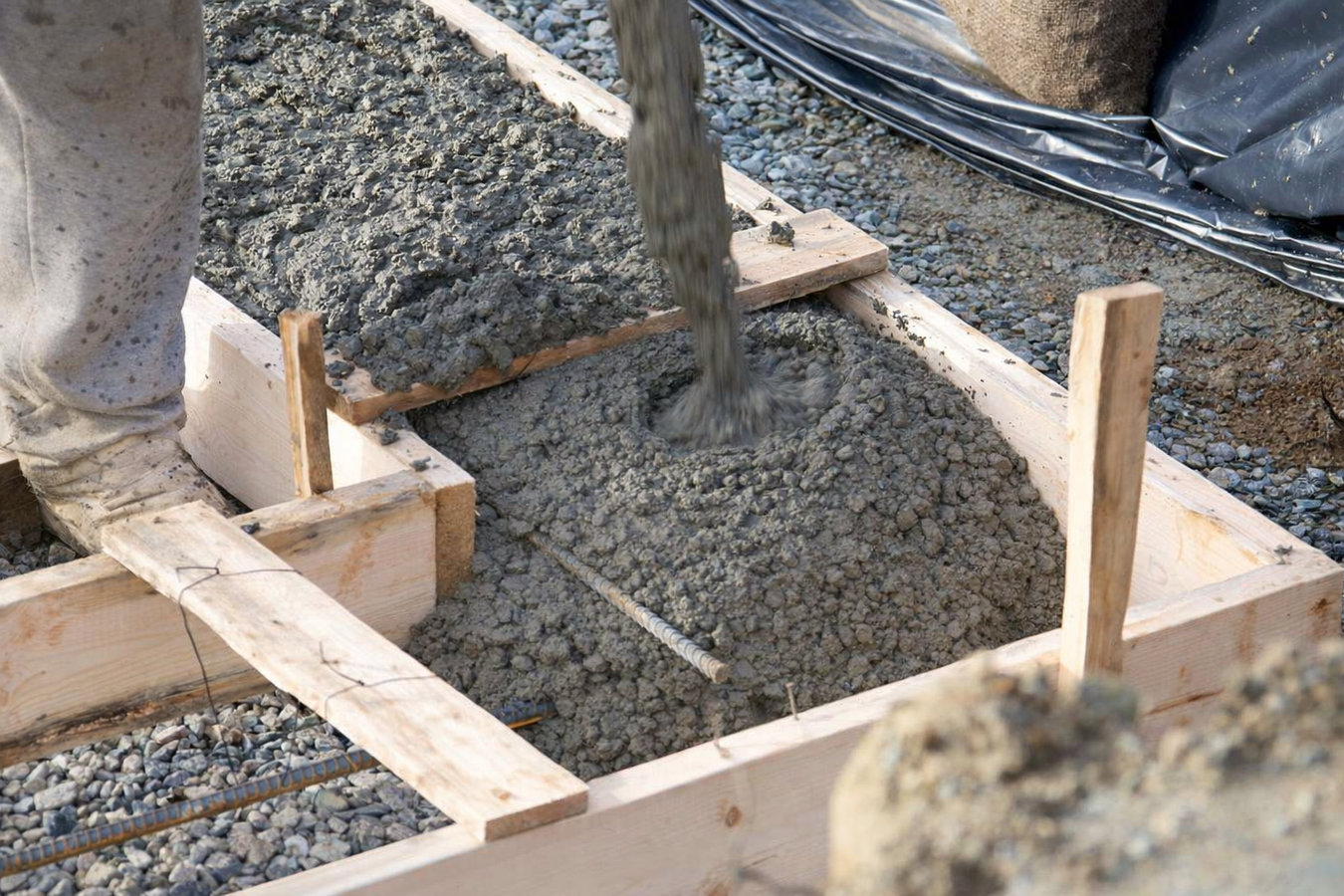
Reinforcement is not optional on any footing we pour in Santa Monica. Steel rebar is placed and tied inside the forms before the pour, sized and spaced to meet the seismic requirements that apply in this part of California. When soil conditions require going deeper or adjusting the footing dimensions, we address that during the estimate - not as a change order after digging starts. For properties where the footings support structures that will also need foundation raising work on an existing structure, we assess both scopes together so the solutions are compatible.
Best for homeowners adding square footage to an existing home or building a detached accessory dwelling unit where new structural footings are required.
Works well for attached or freestanding deck structures, pergolas, and covered patios that need individual concrete piers rather than a full continuous footing.
Suited for detached garages, workshops, or garden structures where the footprint is larger and a continuous perimeter footing is the right approach.
For properties where an existing footing has cracked, settled, or failed inspection and needs to be removed and replaced before a project can proceed.
Santa Monica sits in one of the most seismically active regions in the United States. Footings here must be engineered for lateral ground movement - the sideways force that happens during an earthquake - not just the downward load of the structure above. That means more steel reinforcement and more detailed engineering review than a comparable project in a lower-risk state. The USGS Earthquake Hazards Program maps this region as one of the highest-hazard areas in the country, and the local building code reflects that. A contractor who does not mention seismic reinforcement requirements when quoting a footing in Santa Monica is a contractor who is not familiar with what the local permit office requires.
Santa Monica is also a built-out city with small lots and tight access - getting excavation equipment into a side yard or rear yard can require hand-digging in confined spaces, which adds labor time. Contractors working near Culver City face similar lot constraints, and those with experience in dense Westside neighborhoods handle access planning differently than contractors used to open suburban sites. The soil variability in coastal Santa Monica - sandy near the beach, more compacted inland - also means that properties near Beverly Hills and the broader Westside benefit from contractors who assess each site rather than applying a standard formula.
We walk the property, assess the soil conditions and access constraints, and review what you are building above the footing. We give you a written estimate - not a phone number - and flag upfront whether a permit is required and what the timeline looks like. You hear back within one business day of your inquiry.
We submit plans to the City of Santa Monica Building and Safety Division and manage the review process. For a standard residential footing, plan review typically takes one to three weeks. We keep you updated so the timeline is clear from the start, not a surprise the week before you expected work to begin.
The crew digs to the required depth, installs wooden or metal forms, and places and ties the steel rebar inside the excavation. Before any concrete is poured, a city inspector must visit and approve what they see. We schedule that inspection and let you know when it is happening - you do not need to coordinate with the city yourself.
Once the inspection is approved, concrete is poured, leveled, and the forms are typically removed within a day or two. The footing needs at least seven days before framing begins. We give you a written curing timeline and walk you through what has been done before we leave the site.
Permit season fills up fast - lock in your start date before the summer ADU and addition rush hits. No obligation to request a quote.
(424) 322-4740We do not pour footings in Santa Monica without the steel reinforcement this seismic zone requires. Rebar is sized, placed, and tied to meet what the local permit office and structural standards call for - not what might pass in a lower-risk state. That reinforcement is what keeps your structure sound when the ground moves.
We submit the permit application, respond to city plan check comments, and schedule the pre-pour inspection. You do not need to track down the building department or wonder where your application stands. Every footing we pour has a city inspection on record before it is covered with concrete - documentation that protects your home value.
Santa Monica coastal soils vary - sandy near the beach, more compacted inland - and a contractor who does not account for that can underbid a job, then hit you with change orders once digging starts. We assess site-specific conditions before giving you a number so the price you are quoted is the price you can plan around.
We have poured footings across Santa Monica, Beverly Hills, Culver City, Torrance, and throughout Los Angeles County. That breadth of local work means our permit knowledge and soil familiarity extend across the Westside - not just one city. The American Concrete Institute standards we follow apply the same way whether we are working on a Santa Monica bungalow or a Westside ADU project.
The permit documentation, seismic reinforcement, and soil assessment we provide on every footing project are what protect your investment long-term - not just what gets the job done quickly.
When footings have settled or shifted, foundation raising addresses the structural correction that footings alone cannot fix after the fact.
Learn moreFor new construction or major additions where a complete foundation system - not just individual footings - is required.
Learn moreADU and addition permit season fills up fast - reach out now so your project starts on your schedule, not the city backlog.